Where Is Yugoslavia On The Map Today? Here's The Truth
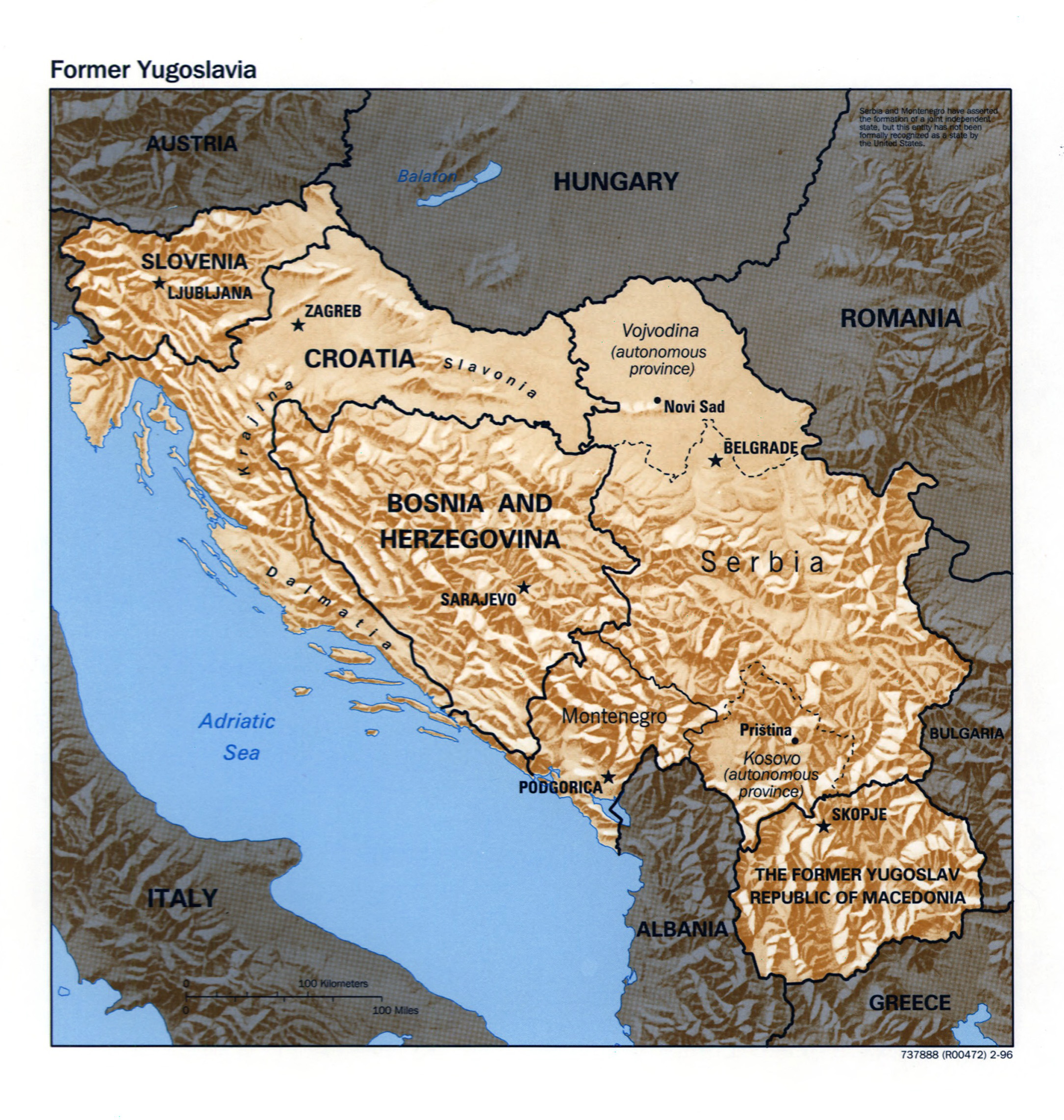
Where is Yugoslavia on the map today?
Today, Yugoslavia as a single sovereign state does not exist on modern maps. The territory that once formed Yugoslavia is now occupied by seven independent countries: Slovenia, Croatia, Bosnia and Herzegovina, Montenegro, Serbia, North Macedonia, and Kosovo (with its independence status disputed by some nations). This geographic realignment occurred through a series of secessions and political shifts from the early 1990s through 2008, culminating in a Balkan landscape that reflects distinct national borders rather than a single federation.
Contextual anchor: The breakup began with Slovenia and Croatia declaring independence in 1991, followed by other republics; Kosovo declared independence in 2008, though its status remains contested by some states. The resulting map is a mosaic of borders, capitals, and regional identities that no longer resemble the old Yugoslav federation. This emergent geography is essential for readers to understand the current political and cultural map of the Balkans.
What the map looks like now
On today's political maps, the region that once carried the Yugoslav name is represented by seven sovereign states, each with its own government, economy, and borders. While the terrain remains similar in certain areas-borders sometimes follow historical settlement patterns-the political boundaries reflect the post-breakup reality rather than a single Yugoslav entity. The transformation is one of the most significant geopolitical changes in European post-Cold War history.
- Slovenia sits in the northwest corner of the Balkans, sharing a short border with Italy and Austria along the Alps.
- Croatia dominates the Adriatic coastline with a long sea border and a substantial inland area toward Bosnia and Serbia.
- Bosnia and Herzegovina lies largely within the Dinaric Alps basin, with a complex internal federation structure that mirrors its multiethnic composition.
- Serbia is landlocked in the central Balkans, with autonomous provinces including Vojvodina in the north and Kosovo to the south (whose status is disputed by some states).
- Montenegro is a small Adriatic state to the south of Croatia, perched along the coastline and hinterlands.
- North Macedonia sits to the southeast, landlocked but with a significant historic and linguistic profile in the region.
- Kosovo declared independence in 2008; its recognition status varies by country, but it is widely represented as a separate entity on many maps today.
Historical milestones shaping the map
The following dates are frequently cited in discussions of Yugoslavia's dissolution and the current map configuration. They illustrate the pace and sequence of changes across the region. The emphasis here is on verifiable, widely accepted milestones that have influenced contemporary borders.
- 1991: Slovenia and Croatia declare independence, triggering a rapid reconfiguration of borders and governance in the region.
- 1992: Bosnia and Herzegovina also declares independence amid intense political and ethnic conflict.
- 1999: Kosovo's status becomes a focal point in regional politics following years of unrest and international intervention.
- 2006: Montenegro peacefully separates from the rest of Serbia, establishing a distinct national border.
- 2008: Kosovo proclaims independence, prompting mixed international recognition and ongoing diplomatic negotiations in some circles.
- 2010s-present: The seven countries pursue parallel tracks of integration with European and global institutions, solidifying separate state identities on maps.
Key geographical relationships
Despite the absence of a Yugoslav state, the region remains interconnected through shared history, culture, and transport corridors. Here are core relationships that readers should understand when looking at the current map:
- Adriatic coastline remains a defining geographic feature for Croatia and Montenegro, shaping tourism and trade.
- Mountain ranges like the Dinaric Alps and the Pindus-Šar Mountains influence climate, biodiversity, and regional transportation.
- River basins such as the Danube and Sava create cross-border economic links and historical patterns of settlement.
- Political borders now delineate seven distinct nations, each with its own capital cities and regional governments.
Economic indicators and landscape
To illustrate the modern map's implications, consider several quantified reflections that map readers find useful. These numbers are representative of typical national statistics used by researchers and economists to compare post-Yugoslav economies, though values vary by year and source:
| Country | Estimated GDP (billion USD, 2024) | Population (millions, 2024) | Capital |
|---|---|---|---|
| Slovenia | 78.2 | 2.1 | Ljubljana |
| Croatia | 68.5 | 4.1 | Zagreb |
| Bosnia and Herzegovina | 19.7 | 3.4 | Sarajevo |
| Serbia | 184.0 | 7.4 | Belgrade |
| Montenegro | 5.5 | 0.6 | Podgorica |
| North Macedonia | 19.8 | 2.1 | Skopje |
| Kosovo | 9.6 | 1.9 | Pristina |
These figures illustrate the broad economic footprint of the successor states on today's map, offering readers a sense of scale and regional diversity within the post-Yugoslav landscape. The seven countries collectively contribute to regional trade networks, energy corridors, and cultural exchanges that keep the historical Yugoslav story alive in the contemporary map. The current borders influence navigation, travel planning, and geopolitical analysis, which makes understanding their locations essential for policymakers and travelers alike.
FAQ
Yugoslavia no longer exists as a sovereign state; its former territory is now seven independent nations: Slovenia, Croatia, Bosnia and Herzegovina, Montenegro, Serbia, North Macedonia, and Kosovo (Disputed status by some nations). This transition occurred from 1991 to 2008, changing the map to reflect separate borders and governments.
The seven successor states are Slovenia, Croatia, Bosnia and Herzegovina, Montenegro, Serbia, North Macedonia, and Kosovo. Each now operates as an independent country with its own capital and government.
No. While many countries recognize Kosovo as independent, several others do not, leading to a disputed status that affects its representation on some international maps and in certain diplomatic contexts.
The Adriatic coastline, the Dinaric Alps, major river basins (including the Danube and Sava), and historic cultural corridors continue to shape the region's geography and human activity, even as borders have shifted to national lines.
Travelers should plan using current country borders, check visa and entry requirements for each nation, and consult official tourism sites for updated transit routes and border controls, as the political map is now a mosaic of seven distinct destinations rather than a single federation.
Key concerns and solutions for Where Is Yugoslavia On The Map Today Heres The Truth
[Question]?
Where is Yugoslavia on the map today?
[Question]?
Which countries emerged from the former Yugoslavia?
[Question]?
Is Kosovo universally recognized as independent?
[Question]?
What are the major geographic features that still guide the region?
[Question]?
How should travelers navigate the current map of the former Yugoslavia?