Puerto Baquerizo Moreno Climate What To Expect Year Round

Puerto Baquerizo Moreno climate overview
The Puerto Baquerizo Moreno climate is warm, humid, and ocean-moderated year-round, with relatively small temperature swings and a strong seasonal shift between a wetter, hotter period and a cooler, breezier one. On San Cristóbal Island in the Galápagos, the town's climate is shaped by the Humboldt Current, trade winds, and El Niño patterns, which can make conditions feel noticeably different from one year to the next.
For most visitors, the key takeaway is simple: Puerto Baquerizo Moreno is not an extreme-heat destination, but it can feel muggy in the warm season and surprisingly cool and windy in the dry season. Recent weather references show daytime temperatures often in the upper 70s to low 80s Fahrenheit, with humidity frequently around 78% to 85% and regular coastal breezes shaping how the air feels on the ground.
What the climate is like
The town has a tropical-oceanic climate that stays mild compared with mainland Ecuador, because the Pacific Ocean buffers temperature swings. Seasonal changes are driven less by drastic temperature shifts and more by moisture, cloud cover, wind, and sea conditions.
The warm season generally brings more humidity, warmer water, and scattered showers, while the cooler season is drier, foggier, and more breezy. Travel guides for the Galápagos describe summers in Puerto Baquerizo Moreno as hot and muggy with occasional showers, and winters as dry, warm, foggy, and breezy.
| Climate feature | Typical pattern | What it feels like |
|---|---|---|
| Air temperature | Roughly 19°C to 27°C annually | Mild to warm, rarely cold |
| Humidity | Often 78% to 85% | Sticky or muggy in warm months |
| Rainfall | More common in the warm season | Brief showers, not long storms |
| Winds | Stronger in the cooler season | Breezier, sometimes choppy seas |
| Sea conditions | Warmer and calmer in summer | Better for swimming and snorkeling |
Seasonal pattern
The most useful way to understand the Puerto Baquerizo Moreno climate is by separating it into two broad seasons: a warm, wetter season and a cooler, drier one. The transition is subtle in temperature but very noticeable in humidity, wind, visibility, and ocean state.
In the warmer months, the air feels heavier and rain is more likely, though showers are often brief rather than persistent. In the cooler months, the sky can become hazier or foggier, and winds often strengthen enough to affect ferry rides, boat excursions, and shore conditions.
- Warm season: hotter, more humid, occasional showers, calmer seas.
- Cool season: drier, breezier, foggier, and slightly cooler water.
- Travel impact: outdoor conditions remain manageable year-round, but ocean activities vary with wind and swell.
Recent conditions
Recent weather snapshots show how moderate the town remains even on active weather days. One recent forecast listed temperatures around 78°F to 82°F with partly cloudy conditions, light rain chances, and southeast winds near 10 mph, illustrating the town's generally mild coastal profile.
Another weather summary reported a current temperature near 21°C, humidity at 85%, and wind around 22 km/h, which is a good example of why the climate can feel more uncomfortable than the thermometer suggests. The combination of moisture and breeze creates a climate that is pleasant for many travelers, but still distinctly marine and changeable.
Climate change signals
Evidence cited in recent climate summaries suggests the town's climate is not static. One published climate-change profile for Puerto Baquerizo Moreno described its current climate change severity as "High," with a score of 57 and a reported 13.5% worsening compared with the previous 16 years.
That same source reported a temperature change of -0.6 °C, annual rainfall variation of -80.3%, PM2.5 increasing by 73.8%, and wind speeds changing by -2.6 km/h from 2010 to 2025. While these figures should be read as website-specific climate indicators rather than official meteorological records, they point to a real concern: local conditions may be shifting in ways that residents and visitors can feel.
"The current climate change severity in Puerto Baquerizo Moreno is High," according to a recent climate summary, which also described measurable shifts in rainfall, temperature, and wind over the last 16 years.
Why it feels different
People often say the Puerto Baquerizo Moreno climate feels different now because the town sits at the intersection of several sensitive ocean-atmosphere systems. The Humboldt Current can cool and dry the air, while El Niño episodes can swing conditions toward warmer seas and stronger rainfall variability across the Galápagos.
That combination means the climate is not only about averages, but also about how often extremes interrupt them. Residents and conservation groups in the Galápagos have repeatedly emphasized that climate change can intensify stress on wildlife, water supply, and seasonal weather patterns, especially when El Niño events become more disruptive.
Best time to visit
The best time to visit depends on what kind of weather you want to experience. If you prefer warmer air, calmer seas, and easier snorkeling conditions, the warmer season is usually more comfortable.
If you prefer lower humidity and slightly cooler temperatures, the breezier season may suit you better. Travelers should still expect marine variability in both seasons, because coastal breezes and changing ocean conditions can affect boat trips, visibility, and beach comfort.
- Choose warm season for calmer water and a more tropical feel.
- Choose cool season for less humidity and stronger breezes.
- Pack for both sun and rain, because short showers can appear unexpectedly.
- Plan boat activities with flexibility, since wind and swell can shift quickly.
What to pack
For the Puerto Baquerizo Moreno climate, packing light but versatile clothing is the smartest approach. Breathable fabrics, sun protection, and a light rain layer are more useful than heavy clothing, because the town's temperatures stay mild even when humidity rises.
- Lightweight shirts and shorts.
- A compact rain jacket or poncho.
- Reef-safe sunscreen and a hat.
- Water shoes or sandals for rocky shorelines.
- A light long-sleeve layer for windy evenings.
Local weather context
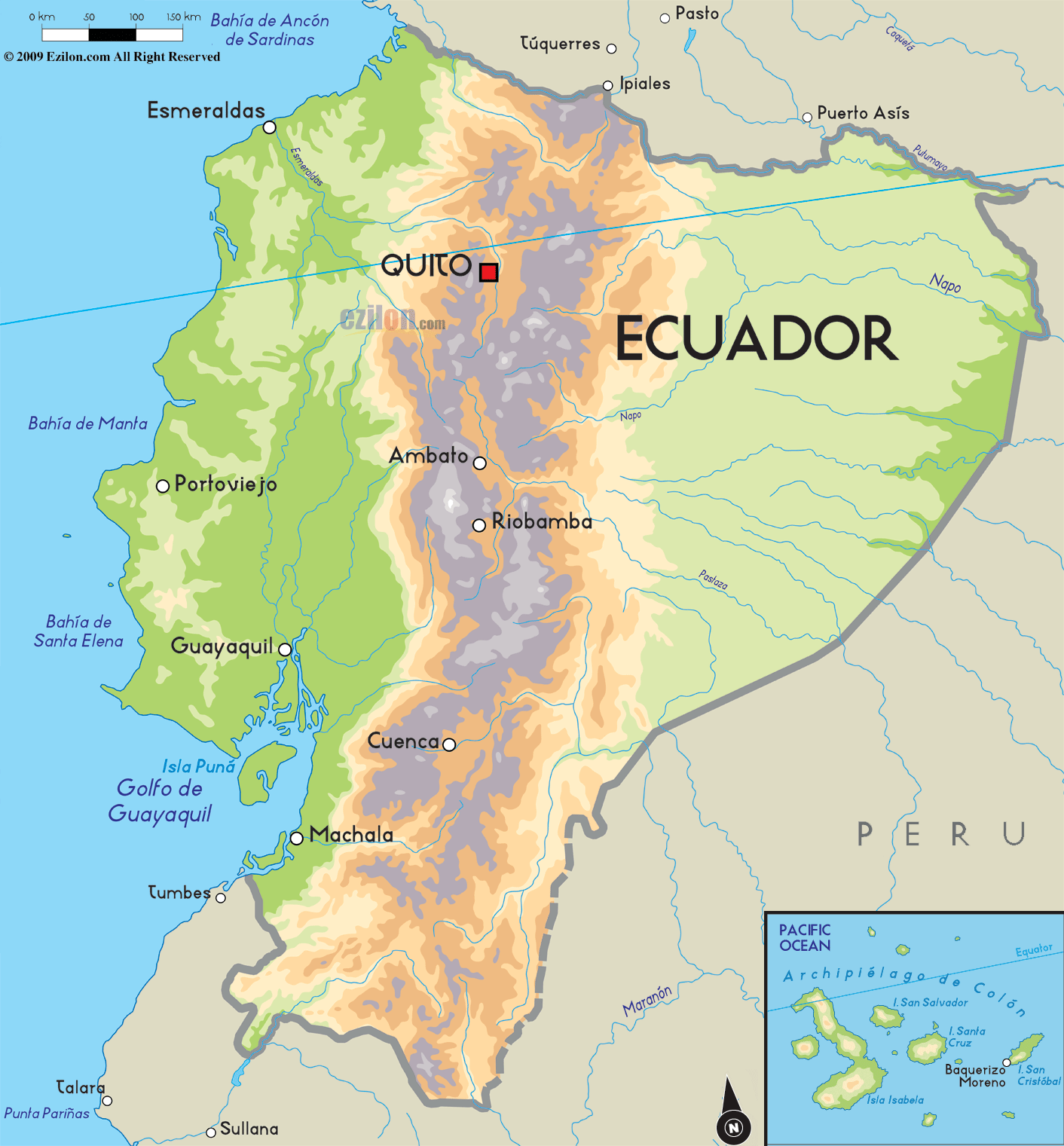
Puerto Baquerizo Moreno is the capital of the Galápagos Province, so its climate matters not just for tourism but also for daily life, transportation, and conservation planning. Weather stability influences fishing, ferry operations, beach use, and the management of freshwater and coastal infrastructure.
Conservation organizations working in the islands have highlighted climate adaptation as a practical necessity, including efforts to build resilience against drought, changing rainfall, and ecosystem stress. That makes the town's climate an environmental issue as well as a travel topic.
Practical takeaway
The most accurate way to describe the Puerto Baquerizo Moreno climate is warm, humid, breezy, and ocean-shaped, with two very different feels across the year. It is a place where temperature alone does not tell the full story; humidity, wind, and sea state matter just as much.
For travelers and residents alike, the climate is still generally favorable, but recent signs of change mean the town may feel less predictable than it once did.
Key concerns and solutions for Puerto Baquerizo Moreno Climate What To Expect Year Round
Is Puerto Baquerizo Moreno hot all year?
No. The town stays warm year-round, but it is usually more humid and hotter-feeling in the warm season, then cooler and breezier in the dry season.
Does it rain a lot in Puerto Baquerizo Moreno?
Rain is part of the climate, but it usually arrives as showers rather than constant downpours. Recent weather summaries show frequent cloudy and rainy days in some months, though conditions remain highly seasonal.
Is the climate getting worse?
Recent climate summaries suggest measurable shifts in rainfall, temperature, and wind, and one source classifies the local climate-change severity as High.
What is the coolest month?
Travel climate guides commonly describe the cooler season as running through the middle and later part of the year, with stronger breezes and slightly lower temperatures.
Is the sea calm there?
Often yes, especially in the warmer season, when seas tend to be warmer and calmer. In the cooler season, breezes can make the water choppier and boat conditions less stable.