Is Montenegro Developed Or Just Emerging? Here's The Truth
Montenegro is partly developed: it is generally considered an upper-middle-income European country with modern tourism infrastructure, solid connectivity, and improving institutions, but it still faces uneven regional development, public-debt pressure, and a smaller industrial base than fully developed EU economies. In plain terms, Montenegro is more developed than many developing countries, but it is not yet at the level of Western European high-income states.
What "developed" means here
Whether a country is "developed" depends on the benchmark. If the standard is income, life expectancy, infrastructure quality, and institutional stability, Montenegro scores better than most lower-income states and is broadly in the upper-middle-income range. If the standard is membership in the club of rich, highly diversified, innovation-led economies, Montenegro still falls short of that threshold.

That is why the most accurate description is not a simple yes or no, but a more precise one: Montenegro economy is a transition economy that has made meaningful progress while still carrying structural weaknesses.
Why Montenegro looks developed
Montenegro has several markers that make it look and feel developed to visitors and investors. The country has a modern tourism sector, a euro-based economy, a compact transport network along the coast, and a political orientation toward European integration. Its scenic Adriatic coastline, resort towns, and private real estate market also give it a more polished profile than many Balkan peers.
- Tourism is a major economic pillar and supports hotels, restaurants, transport, and real estate.
- The country uses the euro, which reduces currency risk and makes pricing more familiar for European visitors.
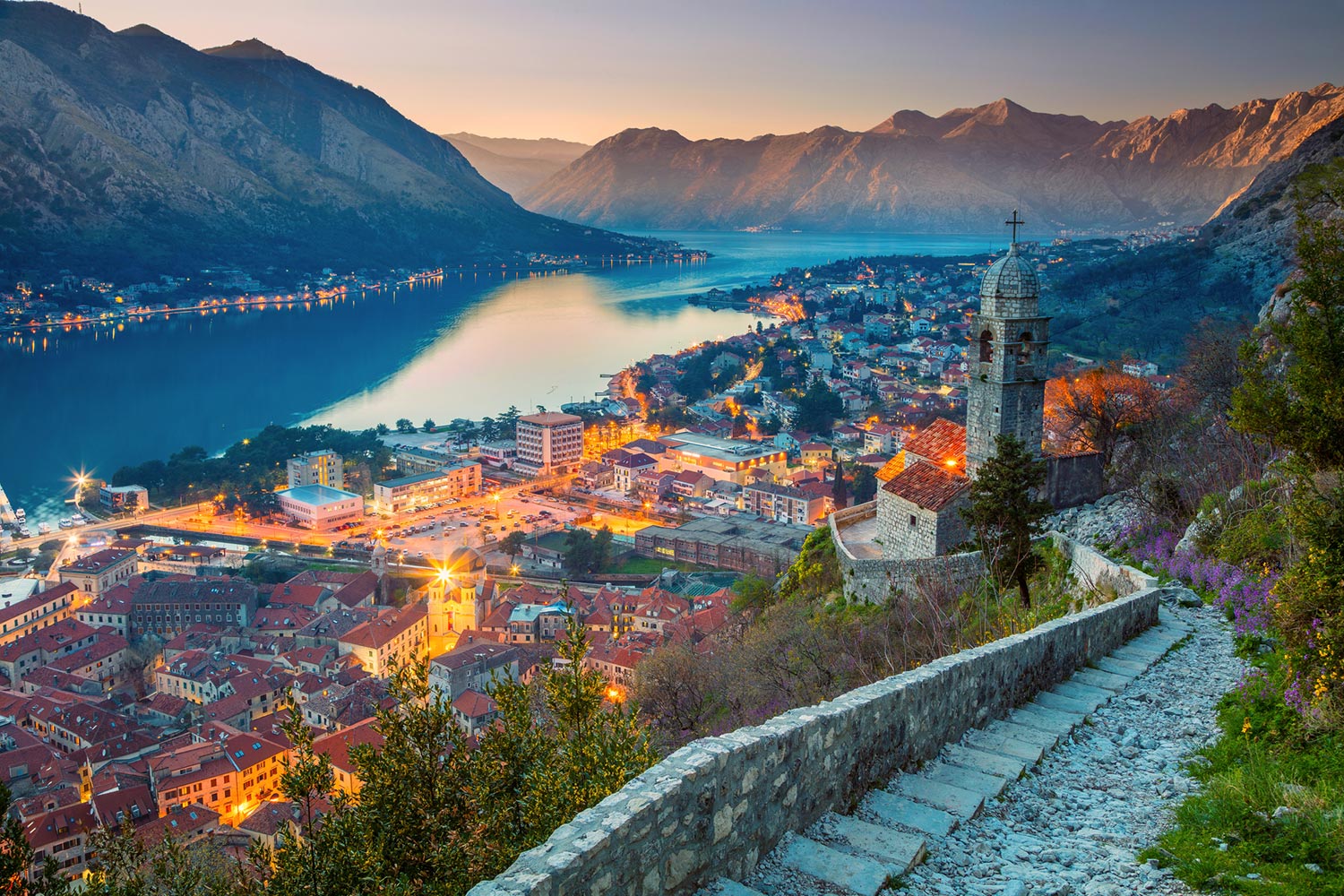
- Coastal cities such as Budva, Kotor, and Tivat have visible signs of modern development, including marinas, luxury housing, and upgraded roads.
- Montenegro has been in the EU accession process since 2012, which has encouraged legal and institutional reforms.
These features matter because development is not only about GDP. In Montenegro's case, the tourism sector has helped create a lifestyle and service economy that feels more advanced than the country's size might suggest.
Why it is still not fully developed
Montenegro still has clear limitations that keep it from being classified alongside fully developed Western European economies. The economy is heavily dependent on services and tourism, which makes it vulnerable to seasonal swings, external shocks, and price changes in key markets. Public finances have also been under pressure, and economic growth remains vulnerable to debt and infrastructure needs.
Another challenge is that prosperity is uneven. Coastal areas usually look far more developed than inland municipalities, and job opportunities are concentrated in a handful of sectors. That gap means the experience of development can vary a lot depending on where someone lives in the country.
The most important issue is the economic structure: Montenegro has growing modern services, but it still lacks the broad industrial depth, export diversity, and productivity levels typical of fully developed states.
Key indicators at a glance
The table below summarizes the broad development picture. The figures are a concise snapshot of the country's position rather than an official statistical filing.
| Indicator | Montenegro | What it suggests |
|---|---|---|
| Income level | Upper-middle-income | Above many developing economies, below high-income Western Europe |
| Growth model | Service and tourism-led | Modern, but narrow and seasonal |
| Currency | Euro used domestically | Greater stability and easier trade/pricing |
| EU path | Accession candidate | Institutional convergence, but not yet membership |
| Infrastructure | Good in major corridors, uneven inland | Developed in places, incomplete overall |
| Fiscal risk | Moderate to elevated | Limits how fast public investment can expand |
Historical context
Montenegro declared independence from Serbia in 2006, and the country's development path since then has been shaped by state-building, foreign investment, tourism, and EU-oriented reforms. That matters because Montenegro has had less time than older European states to build institutions, diversify its economy, and close infrastructure gaps.
In that sense, the country's current profile is best understood as a transition from post-Yugoslav fragility toward a more mature European model. The independence era created opportunities, but it also left Montenegro with the burden of building a modern state relatively quickly.
"Montenegro is a country in transition both politically and economically."
Where the progress is visible
Progress is easiest to see in the coast, tourism services, and parts of the capital region. Private investment has improved hotels, marinas, apartments, and roads in select corridors, while digital services and cross-border business links have also expanded. The result is a country that can look highly developed in one district and distinctly underbuilt in the next.
Education and health outcomes are better than in low-income countries, and basic services are widely available. That said, the quality gap between public and private services, and between urban and rural areas, remains important. The coastal economy is the clearest example of how development has advanced faster in some places than others.
Main weaknesses
Montenegro's most persistent weakness is dependence on a narrow set of growth engines. Tourism brings money, but it also creates seasonal employment and makes the economy sensitive to external demand. Construction and real estate can boost growth, but they do not by themselves create the broad productive base associated with fully developed economies.
- Heavy reliance on tourism and services.
- Limited industrial diversification.
- Regional inequality between coast and inland areas.
- Public debt and fiscal pressure.
- Governance and corruption concerns that can slow reform.
These problems do not mean Montenegro is undeveloped. They mean it is still consolidating the foundations of development. The fiscal pressure issue is especially important because it affects how much the government can spend on roads, schools, hospitals, and long-term productivity gains.
How to think about it
A practical way to judge Montenegro is to compare it with three groups. It is ahead of low-income and many lower-middle-income countries on income, travel infrastructure, and regional integration. It is roughly in the middle of the Western Balkans on some indicators. It is still behind the developed EU core on productivity, export sophistication, state capacity, and average wages.
For travelers, Montenegro can feel developed because the coast is attractive and services are easy to access. For economists, the country is still a work in progress because the underlying growth model remains narrow. The Western Balkans comparison is useful because it shows Montenegro is not at the bottom of Europe, but not at the top either.
Bottom line
Montenegro is developed in a limited and relative sense, but not fully developed by the standards of high-income Western Europe. It has a modern tourism economy, usable infrastructure, and a stable European outlook, yet it still faces debt, diversification, and inequality challenges. The reality is that Montenegro sits in the middle: more advanced than many countries, but still climbing toward full development.
Expert answers to Is Montenegro Developed Or Just Emerging Heres The Truth queries
Is Montenegro richer than most Balkan countries?
Montenegro is generally wealthier than many countries outside the EU and has stronger tourism revenues than most of its neighbors, but its income level and public finances still trail the most advanced European economies.
Is Montenegro a safe place to live?
Montenegro is generally considered a relatively safe country for residents and visitors, especially in major towns and tourist areas, though as in any country, safety varies by location and situation.
Does Montenegro have good infrastructure?
Montenegro has good infrastructure in major tourist and urban corridors, especially along the coast, but inland roads, logistics links, and some public services still need improvement.
Will Montenegro become developed soon?
Montenegro could move closer to developed-country status if it keeps improving governance, diversifies beyond tourism, and advances toward EU integration, but that will likely take years rather than months.