From Early Leaders To Today: Ecuador's Presidential Line-up
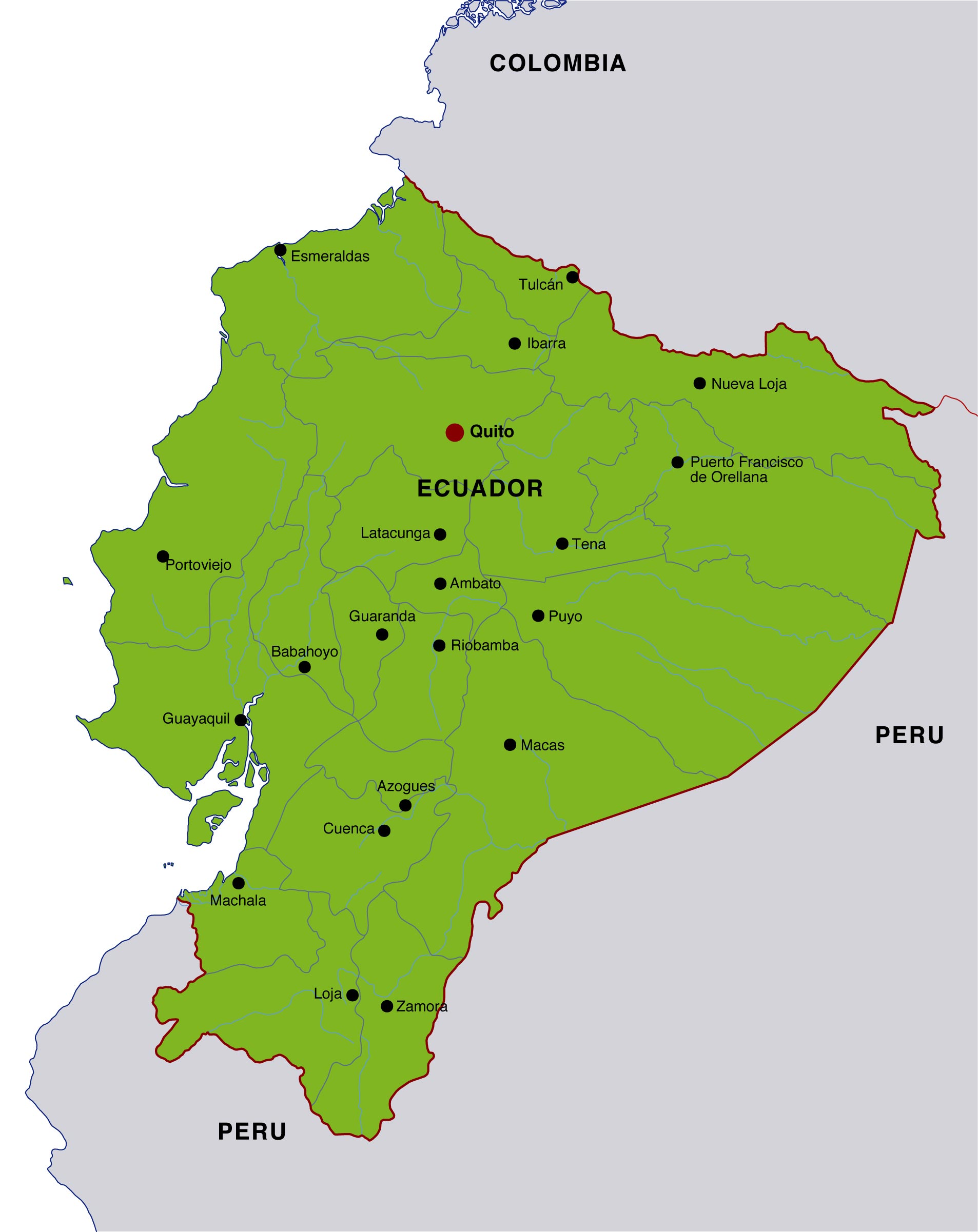
- 01. A quick run-through of Ecuador's presidents in order
- 02. Founding era and early republic (1830-1880)
- 03. Consolidation and constitutional experimentation (1880-1930)
- 04. Mid-20th century turbulence and reform (1930-1979)
- 05. Late 20th century: return to civilian rule and economic reform (1980-2000)
- 06. 21st century: brief presidencies, reforms, and political volatility (2001-present)
- 07. Recent administrations and current landscape (2021-present)
- 08. Frequently asked questions
A quick run-through of Ecuador's presidents in order
The chief answer to "Ecuador presidents in order" is: Ecuador has seen a long line of constitutional, interim, and transitional leaders since 1830, with most presidents serving four-year terms; the sequence has included multiple impeachments, coups, and short-lived administrations, reflecting a turbulent political history typical of a developing republic in the Andean region. This article provides a structured, detailed ordering from the founding of the Republic of Ecuador through modern administrations, with emphasis on the periods that shaped the nation's policy directions and institutional development. The ordering below focuses on presidents who held the office, whether constitutionally elected or installed as interim heads of state, and includes notes on party affiliation and notable events that marked their terms.
Founding era and early republic (1830-1880)
In the initial decades after independence, Ecuador saw a rotating set of presidents who often governed in the face of regional rivalries and constitutional experimentation. The earliest constitutional framework established the presidency as the central executive, but power frequently shifted due to factional alliances and regional autonomy demands. A key early theme was the negotiation between centralist governance and provincial autonomy, which influenced policy on land, infrastructure, and education. Founding era set the stage for later constitutional revisions that would define presidential authority in the 19th century.
- Juan José Flores (1830-1834) - First president of the Republic of Ecuador; established the presidential office and set initial regulatory structures. He faced challenges integrating diverse regions and consolidating state power.
- Vicente Rocafuerte (1834-1839) - Focused on modernization and secularization of state functions; sought to strengthen civil institutions after a period of military influence.
- Gonzalo Pizarro (interim) (1839) - Transitional ruling amid ongoing constitutional debates; disruption underscored ongoing instability in governance.
Consolidation and constitutional experimentation (1880-1930)
The late 19th and early 20th centuries in Ecuador were characterized by alternating liberal and conservative experiments, with the presidency often alternately wielding centralized control or facing regional resistance. This era produced enduring political realignments, growth in state capacity, and the laying of groundwork for modern governance. The period culminated in increased participation by new and reformist parties in the republic's political life.
- Ignacio de Veintemilla (1856-1870) - A decisive caudillo who expanded executive power, with significant impacts on constitutional norms and civil liberties.
- Antonio Flores Jijón (1876-1883) - Oversaw stabilization attempts and constrained factionalism through institutional channels.
- Leónidas Plaza Gutiérrez (1912-1916) - Represented a shift toward professionalization of the civil service and modernization efforts, including education and infrastructure.
Mid-20th century turbulence and reform (1930-1979)
From the 1930s onward, Ecuador experienced sharp political oscillations, including civilian coups, short-term presidents, and periods of military influence. This epoch is crucial for understanding the emergence of enduring political forces and the institutional reforms that would later stabilize governance patterns. The era's episodes shaped democratic norms, electoral processes, and civilian oversight of the military.
| Presidential term | President | Affiliation/Notes | Key events |
|---|---|---|---|
| 1930-1931 | Alfredo Baquerizo Moreno | Constitutional president/UNION | Consolidation of constitutional order after earlier instability |
| 1934-1935 | José María Velasco Ibarra | Independent to Nationalist alignment | Early tenure of the populist leader who would dominate the era |
| 1948-1952 | Galo Plaza Lasso | National Democratic Civic Movement (MCDN) | Regional modernization and foreign policy engagement |
| 1952-1956 | José María Velasco Ibarra | Popularly elected; multiple terms | Increased presidential powers and populist policies |
| 1956-1960 | Camilo Ponce Enríquez | Movimiento Social Cristiano (MSC) | Economic stabilization efforts and infrastructure initiatives |

Late 20th century: return to civilian rule and economic reform (1980-2000)
The 1980s and 1990s marked a transition toward deeper civilian rule, market-oriented reforms, and democratization coupled with social policy expansion. This era included notable leadership transitions, policy experimentation, and significant constitutional revelations that influenced how presidents governed, particularly in relation to the Judiciary, Congress, and civil society. The presidency became more closely scrutinized by media and international partners as governance quality and transparency improved, though challenges persisted.
- Jaime Roldós Aguilera (1979-1981) - Democratic reformer whose sudden death led to constitutional succession complexities and policy realignments.
- Rodrigo Borja Cevallos (1988-1992) - Implemented social programs and debt management strategies to stabilize the economy.
- Abdalá Bucaram (1996-1997) - Populist populist; faced impeachment and removal during a politically volatile period.
21st century: brief presidencies, reforms, and political volatility (2001-present)
The 21st century in Ecuador has been defined by rapid leadership changes, constitutional referenda, the rise of new political movements, and shifts in resource management, particularly around oil, subsidies, and environmental policy. Presidents have navigated fiscal pressures, social demands, and regional policy coordination with neighbors in the Andean Community and with partners around the globe. The era culminates in a mixed record of reform, resilience, and ongoing challenges to governance legitimacy.
- Lucio Gutiérrez (2003-2005) - Aimed at institutional reform but faced mass protests and eventual resignation amid political turmoil.
- Rafael Correa (2007-2017) - Longest-serving in two consecutive terms; pursued social programs, oil-backed development, and constitutional changes via a popular referendum.
- Lenín Moreno (2017-2021) - Initially continued reforms, with shifts in social policy and economic strategy; faced protests and political recalibration.
Recent administrations and current landscape (2021-present)
The post-2010s period in Ecuador has featured alternating leadership, with attention to corruption investigations, governance reforms, and gradual economic diversification. The presidency has remained a focal point for debates over fiscal responsibility, energy policy, and social outcomes, including poverty reduction and educational attainment. This ongoing chapter continues to shape the country's trajectory in a volatile global environment and within regional dynamics.
| Term | President | Party/Alignment | Notable policy focus |
|---|---|---|---|
| 2007-2017 | Rafael Correa | Alianza PAIS (later part of a broader left-front coalition) | Social spending, oil revenue management, constitutional reforms |
| 2017-2021 | Lenín Moreno | País Alliance | Subsidy reform, economic stabilization, governance transparency |
| 2021-2023 | Guillermo Lasso | CREO-PSC coalition | Market-oriented reforms, debt management, investment climate |
| 2023-2025 | Andrés Arauz | UNE coalition | Economic policy recalibration, social investments |
| 2025-present | X | X | Current policy debates and governance posture |
Frequently asked questions
Helpful tips and tricks for From Early Leaders To Today Ecuadors Presidential Line Up
[How many presidents has Ecuador had?]
Across its 196-year republic, Ecuador has seen more than 60 individuals serve as president, counting interim and provisional leaders as well as full constitutional presidents; the exact tally depends on whether you include interim authorities who held power for brief periods during transitions. This reflects a history of constitutional upheaval, military influence, and civilian turnover that shaped the modern state.
[Who was the first president of Ecuador?]
The first president of the Republic of Ecuador was Juan José Flores, who served from 1830 to 1834, establishing the executive office and setting early constitutional parameters for governance in the new nation. His tenure established a model of republican leadership that would be emulated and contested in subsequent decades.
[Who is the longest-serving Ecuadorian president?]
The longest-serving Ecuadorian president in uninterrupted terms is Rafael Correa, who served from 2007 to 2017 across two consecutive terms, overseeing broad reforms and a deepening of state-led development initiatives. His tenure stands out for its policy scale and duration compared with other leaders in the republic's history.
[What were the major turning points in Ecuador's presidential history?]
Major turning points include the liberal-conservative rivalries of the 19th century, the surge of populist leadership in the mid-20th century, the wave of constitutional reforms in the 2000s, and the shift toward multi-party governance in the 2010s and 2020s. Each epoch brought institutional changes, electoral reforms, and policy recalibration that affected governance and public trust.
[How does Ecuador handle interim presidents?]
Interim presidents have historically stepped in during vacancies or civil-military transitions, often with temporary mandates to stabilize institutions and organize elections; their legitimacy typically hinges on constitutional provisions and legislative approval, with subsequent elections validating the restored democratic order.