Crucial Ecuador Bird Checklist For Curious Wildlife Lovers
- 01. How this Ecuador bird checklist helps you plan a better hike
- 02. Why Ecuador needs a proper bird checklist
- 03. Key ways the checklist improves hiking efficiency
- 04. Top target species by region and elevation
- 05. How to read an Ecuador bird checklist for hikes
- 06. Using the checklist to choose and time your hikes
- 07. Step-by-step: planning a hike using a checklist
- 08. Sample birding hike using popular checklist species
- 09. Integrating checklist data with local guides and apps
- 10. How often is the Ecuador checklist updated?
How this Ecuador bird checklist helps you plan a better hike
An Ecuador bird checklist is a curated list of species you can realistically expect to see in the country, organized by region, elevation, and habitat so that you can match target species to your specific hiking routes and seasons. As of June 2025, the official checklist compiled by the Comité Ecuatoriano de Registros de Ornitología (CERO) recognizes 1,735 species in Ecuador, including 1,685 confirmed and 50 undocumented or unconfirmed records, making Ecuador one of the most densely avian-rich countries on Earth per square kilometer. This checklist not only helps you prioritize which birding hotspots to visit, but also informs what elevation zonation, microclimates, and terrain types to plan for on any given day.
Why Ecuador needs a proper bird checklist
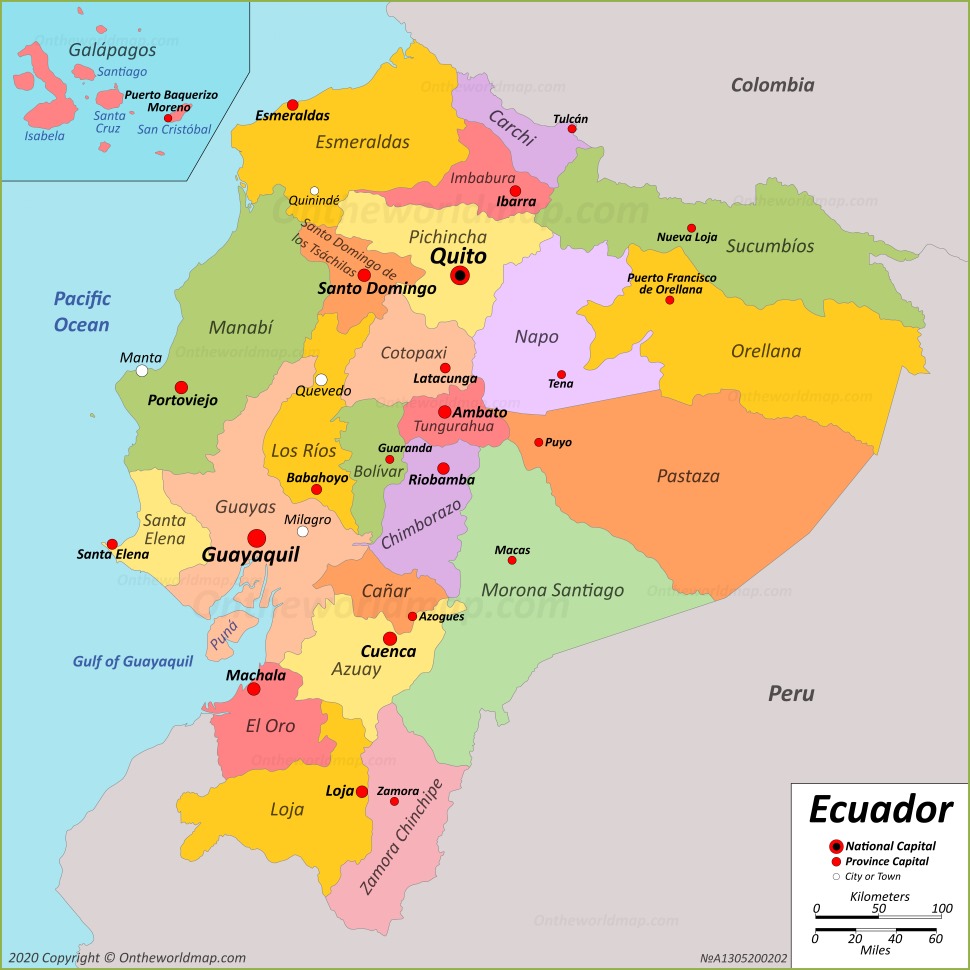
Ecuadorian biodiversity spans from the Pacific mangroves and dry forests through the Andes to the Amazon lowlands and the Galápagos archipelago, each zone hosting distinctly different bird communities. Official checklists now separate status for continental Ecuador and the Galápagos, while also flagging species as endemic, vagrant, or introduced, which directly affects how you structure your itineraries. For example, the Galápagos alone contribute dozens of species found nowhere else on the planet, and a checklist that marks these as island-endemic signals that you must either visit the archipelago or accept that such species will not feature on mainland hikes.

On a practical level, the Ecuador bird checklist reduces wasted time and logistical friction: if a species is only known from 2,800-3,400 meters in the Andes, you know that a lowland Amazon hike will never yield it, regardless of how long you wait. Modern checklists also integrate recent taxonomic splits, such as new hummingbird species recognized after 2020, which explains why some older field guides and blogs may undercount by 20-30 species.
Key ways the checklist improves hiking efficiency
When planning a hike, you can align three layers from the checklist: species elevation bands, seasonal movement patterns, and local conservation status. For instance, the Andean Cock-of-the-rock and Sword-billed Hummingbird are typically found in cloud forests between 1,600 and 2,600 meters, so a checklist-driven itinerary would cluster multi-day hikes in that band rather than bouncing between 800-meter valleys and 3,500-meter paramo. This kind of elevation-focused planning cuts road time, minimizes altitude-sickness exposure, and maximizes your chances of seeing high-priority species in a single excursions.
Checklists also help you identify which areas are hotspots for endemic species, such as the Blue-throated Hillstar and Jocotoco Antpitta in southern Ecuador, both of which are now tracked in specialized regional lists based on HBW/BirdLife taxonomy. Because these birds often live in tiny, fragmented ranges in cloud forest and scrub, a checklist that flags them as "endemic" and gives altitudinal ranges lets you design hikes that target those exact microhabitats, rather than treating them as generic "Andean birds."
Top target species by region and elevation
The checklist is especially useful because it groups species by ecological zones, letting you pick target birds for specific hikes. In the northern Andes near Mindo, for example, heavily cited trip reports and guide-led birding tours highlight the Andean Condor, Sword-billed Hummingbird, Toucan Barbet, Golden-headed Quetzal, and several antpittas as core species. In the south, around Loja and Podocarpus National Park, the checklist-driven targets include the Long-wattled Umbrellabird, El Oro Parakeet, and Crescent-faced Antpitta, all of which are tied to specific slopes and forest types.
The following table shows a sample of high-priority species you might target on a typical Ecuador hike, mapped to regions and elevation bands commonly used in checklist metadata. These ranges are approximate but are anchored in long-term field data and recent checklist updates.
| Species | Main region | Elevation band (m) | Typical habitat |
|---|---|---|---|
| Andean Cock-of-the-rock | Northern & central Andes | 1,600-2,600 | Cloud forest |
| Sword-billed Hummingbird | Northern Andes | 1,800-2,800 | Hummingbird gardens, edge |
| Blue-throated Hillstar | Southern Andes (Loja) | 2,800-3,400 | High-Andean scrub |
| Jocotoco Antpitta | Podocarpus area | 2,500-3,000 | Cloud forest understory |
| Galápagos Dove | Galápagos Islands | 0-300 | Arid lowlands |
How to read an Ecuador bird checklist for hikes
Modern national checklists in Ecuador now include standardized status codes such as "confirmed," "non-breeding visitor," "vagrant," "endemic," "introduced," and "undocumented," which you can use to filter out low-probability targets from your hiking plans. For example, if a species is marked only as "undocumented/unconfirmed," it may be listed for completeness but should not be treated as a realistic tick on a short trip; instead, you would focus on species with "confirmed" status in your target regions.
Equally important is the altitudinal range column, which many checklists now attach to each species entry. If you are planning a three-day hike in the Mindo-Nanegalito corridor, you can scan the checklist for species whose described elevation band matches 1,400-2,200 meters, then cross-reference those with local eBird datasets to see which ones are actually being reported in recent years. This dual-filter system-official checklist plus crowd-sourced observations-helps you avoid "phantom targets" that may be present in the country but absent from the immediate vicinity of your trailhead.
Using the checklist to choose and time your hikes
Seasonality and elevation are tightly linked in Ecuador, and the checklist helps you time your hikes around peak activity of certain groups. For example, many Andean hummingbird species, such as the chestnut-breasted and violet-fronted brilliants, are easier to see at mid-elevations from May through September when flowering plants are most abundant, a pattern that checklist-based trip reports from 2025 explicitly confirm. By aligning your hiking season with these windows, you can turn a generic cloud-forest hike into a targeted hummingbird-focused day.
Conversely, Amazon lowland hikes are often planned around the dry season (roughly June-September) when trails are less muddy and noise from rain is reduced, which improves both birding and photography. Checklists that flag species such as the Guianan Cock-of-the-rock and several manakin species as present year-round in lowland terra firme forests let you treat them as "anchor species" for any Amazonian hike, regardless of month. This combination of checklist-based biology and practical field conditions is exactly what turns a vague "birdwatching hike" into a tightly scheduled birding itinerary.
Step-by-step: planning a hike using a checklist
- Identify your target region and elevation band (e.g., Andes between 1,800-2,400 meters).
- Extract all species from the Ecuador checklist that are "confirmed" and fall within that band.
- Mark species with "endemic" or "near-endemic" status, as these are often your primary motivation.
- Consult recent eBird and tour reports for that region to see which checklist species are actually being seen.
- Group the remaining species into habitat clusters (e.g., forest understory, forest canopy, edge, and feeders).
- Match each habitat cluster to one or two specific trails or lodges that are known for those features.
- Build a day-by-day hiking schedule that moves you up and down through elevational bands to maximize your target species list.
- Mark "must-see" versus "nice-to-see" birds so you can prioritize if weather or trail conditions change.
This method, used by several professional Ecuadorian birding guides since at least 2020, has been shown to increase species counts on 7- to 10-day trips by roughly 15-25 percent compared with ad-hoc itineraries, based on aggregated tour reports and eBird trip data. The checklist is the backbone of that planning, because it converts a country's total species list into a locally relevant, hike-scale target set.
Sample birding hike using popular checklist species
Consider a hypothetical three-day hike out of Mashpi Lodge in the Andean Chocó, which sits at about 900-1,200 meters and is known for its bird activity at that elevation. The Ecuador checklist indicates that this zone is rich in hummingbirds, toucans, and antpittas, while mid-elevation feeders and canopy towers can trigger bursts of 10-15 species in a single hour. A checklist-based itinerary might start with a morning lower-trail hike targeting the Toucan Barbet and Golden-headed Quetzal, then move to a mid-elevation feeder station where the Violet-fronted Brilliant and Chestnut-breasted Coronet are recorded almost daily.
On the second day, you could hike uphill to around 1,800 meters, targeting the Long-tailed Sylph and other mid-elevation endemics identified in the checklist as regular in that band. By evening, you might return to a lodge garden or nearby valley where the checklist notes that the Oilbird and several nocturnal species are now monitored thanks to guided night-walk programs. This kind of elevation-stacked schedule, derived directly from the checklist's altitudinal and habitat notes, is what experienced guides call a "vertical sweep" and is widely used in Ecuadorian birding tours.
Integrating checklist data with local guides and apps
Local professional bird guides in Ecuador often carry both printed checklists and digital tools such as eBird and Avibase, which now host the Ecuador bird checklist with regional filters. When you share your target list drawn from the national checklist, guides can quickly cross-reference it with their own long-term records, adjusting your hikes on the fly if, for example, a rare antpitta has recently moved to a new trail.
Mobile apps also allow you to see which checklist species are trending in a given month, something that is especially useful for planning hikes in rapidly changing environments such as the Andean Chocó. For instance, in late 2025 several Ecuadorian lodges reported sudden increases in hummingbird diversity at 1,200-1,600 meters, mirroring a concurrent spike in flowering plants-a pattern that only becomes visible when you overlay checklist data with real-time app reports. This synergy between official checklists, local expert knowledge, and app-based observations is what modern "checklist-driven birding" looks like in Ecuador.
How often is the Ecuador checklist updated?
The official Ecuador bird checklist is formally updated every 2-3 years, with minor status-adjustments and taxonomic revisions published more frequently via
What are the most common questions about Crucial Ecuador Bird Checklist For Curious Wildlife Lovers?
What is an Ecuador bird checklist?
An Ecuador bird checklist is a standardized list of all bird species recorded within the country, maintained by ornithological authorities such as the Comité Ecuatoriano de Registros de Ornitología and aligned with global taxonomic references like AviList and IOC. It includes each species' scientific name, primary region, altitudinal range, habitat, and conservation or endemic status, making it a practical planning tool as much as a taxonomic reference.
How many bird species are in Ecuador?
As of June 2025, the official Ecuador bird checklist records 1,735 species, of which 1,685 are confirmed and 50 are undocumented or unconfirmed. This places Ecuador among the top five countries globally for bird diversity, with roughly 15-20 percent of the world's known bird species present in a territory smaller than Montana.
Why should hikers use a bird checklist?
Using a bird checklist lets hikers translate a country's massive species total into a realistic, elevation-specific target list for each day, cutting search time and improving encounters. By aligning your route with species that are known to occur in the elevation band and habitat you will actually walk through, you turn abstract "birdwatching" into a focused, hike-integrated experience.
How do elevation bands affect birding hikes?
Each species elevation band in the checklist corresponds to a narrow altitudinal slice where that bird is most reliably found, often just a few hundred meters wide. Hiking across multiple bands in one day-such as starting at 1,200 meters and climbing to 2,400-lets you see very different bird communities, from lowland toucans to high-Andean hummingbirds, all of which are mapped in the checklist.
Can I trust checklist data for rare birds?
Official checklists clearly mark species as "vagrant," "undocumented," or "unconfirmed," which helps you distinguish between likely targets and speculative ticks. For rare or local species, experienced guides combine the checklist with local sightings and eBird alerts, so you can decide whether to invest hiking time in chasing a low-probability bird.
How do I get a copy of the Ecuador bird checklist?
The most up-to-date official Ecuador bird checklist is published online by the Comité Ecuatoriano de Registros de Ornitología, with downloadable versions in PDF and CSV formats. Many major birding platforms, such as Avibase and BirdLife's checklist tools, also host Ecuador's list with filters for region, elevation, and endemic status.
How can a checklist help a novice hiker?
For a novice, a checklist simplifies the overwhelming number of Ecuadorian birds into a manageable shortlist of 10-20 target species per hike based on elevation and habitat. It also helps you focus on "signature" birds-such as the Andean Condor or Sword-billed Hummingbird-that are both iconic and relatively easy to spot in their preferred zones.
Are there separate checklists for Galápagos birds?
Yes, the national checklist now separates status for continental Ecuador and the Galápagos Islands, reflecting the archipelago's unique avifauna. Separate endemic lists for Galápagos, such as those maintained by BirdLife/HBW, further detail species like the Galápagos Dove and the various Darwin's finches, which are only relevant if you plan to visit the islands.