According To Plato What Is Real-can You Trust Your Eyes?
- 01. What Plato Considered Real
- 02. Historical Anchors
- 03. Core Concepts of Reality in Plato's Thought
- 04. The Realm of Forms
- 05. The Problem of Universals
- 06. The Allegory of the Cave
- 07. The Form of the Good
- 08. Historical Figures and Textual Anchors
- 09. Implications for Knowledge and Reality
- 10. Representative Quotes
- 11. Practical Takeaways for Readers
- 12. Comparative Snapshot
- 13. Frequently Asked Questions
- 14. Advanced Context: Debates and Legacy
- 15. Methodological Notes for Researchers
- 16. Closing Reflections
What Plato Considered Real
The primary answer to the question "according to Plato, what is real?" is that reality, in the most enduring and trustworthy sense, lies not in the changing phenomena of the physical world but in eternal, unchanging forms or Ideas that underpin all particular things. For Plato, the visible realm is a flawed, imperfect copy of a higher, intelligible realm where perfect forms exist in a timeless, immutable state. the theory of forms explains how we can know universal truths despite sensory flux; it posits that every object or virtue in the material world participates in or imitates a corresponding Form in the realm of forms. This is not mere theory; it underwrites epistemology (how we know) and ontology (what exists) in his philosophy, making the Forms the real, ultimate objects of knowledge.
To ground this in historical context, consider the allegory of the cave, which appears in Book VII of the Republic. Prisoners chained in a cave take shadows on the wall for reality, until a prisoner is freed and discovers the sunlit world of Forms. The sunlight represents the Form of the Good, the ultimate source of intelligibility. Plato suggests that most people live in ignorance, mistaking sensory appearances for reality, whereas the philosopher ascends to grasp the Forms through rational ascent and dialectic. This ascent culminates in knowledge of the Form of the Good, which allows all other Forms to be understood as knowable. In this framework, the real is not contingent or empirical but necessary and intelligible. Allegory of the cave remains a vivid badge of his anti-skeptical stance toward mere sensory data as evidence of reality.
From a methodological perspective, Plato's realism about the Forms leads to a distinctive account of knowledge. Perception-what we see, hear, or touch-is unreliable and often deceptive, rendering it an insufficient basis for truth. Instead, knowledge is justified, true belief that rests on the apprehension of these perfect, abstract Forms. The Forms are non-physical yet absolutely real; they have timeless essences that structure the sensible world. For instance, the Form of Beauty is not a particular beautiful object but the precise, perfect idea of beauty that all beautiful things partake in or reflect to varying degrees. This means that even though individual entities may change or decay, their underlying Form remains constant and real. epistemology through recollection is a closely related notion: learning is a process of remembering the perfect Forms latent in the soul, which the senses can only hint at.
Historical Anchors
Plato's metaphysical realism is anchored by early dialogues and later systematic treatises. In the Phaedo, Socrates discusses death and the soul's immortality while arguing for the reality of the Forms as eternal objects of knowledge. In the Republic, the divided line and the sun analogy elaborate how ascent from perception to rational understanding leads to knowledge of the Form of the Good, the source of all intelligible content. In the Timaeus, Plato extends his ontology into a cosmology where the sensory world is a crafted but imperfect copy of a rationally ordered, intelligible cosmos. Across these works, the claim remains: the most real things are not the physical objects we interact with but the enduring, perfect archetypes that those objects instantiate. dialogues provide the argumentative scaffolding for this claim, showing how questions, definitions, and dialectical procedure uncover the Forms.
In terms of historical influence, Plato's Forms inspired centuries of metaphysical and epistemological debate. Later philosophers, including Aristotle, would challenge or refine the theory of Forms, offering alternative accounts of universals, causation, and the relationship between mind and world. Yet the core intuition persists in modern discussions: reality may be best understood as structured by abstract, enduring realities rather than by transient appearances. The Forms concept re-emerged in contemporary discussions of mathematical realism and scientific theories of universals, even as philosophers dispute the exact semantics. A notable point is that Plato never claimed the Forms exist in a spacelike, physical sense; rather, they exist in a realm grasped by intellect, not by sense perception. Plato's philosophical system thus invites us to distinguish between what appears to be real and what is truly real in the strongest possible sense.
Core Concepts of Reality in Plato's Thought
Plato's account of reality is organized around several core concepts, each reinforcing the central claim that true reality lies beyond the sensory world. the realm of forms is the central node, but other ideas-such as the soul, knowledge as recollection, and the role of dialectic-illuminate how we approach and recognize that reality. The following subsections present these interlocking ideas with precision and clarity.
The Realm of Forms
The Forms are perfect, abstract, and non-material archetypes that serve as the standard by which all particular things are measured. A Form is timeless, unchanging, and universally applicable. For example, any beautiful object participates in the Form of Beauty, but no single object exhausts beauty itself. This makes beauty objective across time and space, even if individual instances vary dramatically. The real thing is the Form itself, not any specific beauty we encounter. archetypes provide the criterion for judging all instances of beauty, justice, or virtue. The implications reach beyond aesthetics to ethics, mathematics, and even natural kinds, suggesting that universals have a real and essential status beyond mere linguistic or subjective constructs.
The Problem of Universals
Plato's Forms give a solution to the problem of universals: how can many different objects share the same property? The answer is that each property corresponds to a Form that all particular instances imitate. This moves the discussion from nominal labels to metaphysical grounding. The Form of Circle, for instance, is the perfect circle itself; any drawn circle approximates that Form but never perfectly embodies it. In this way, commonalities across disparate objects reflect participation in a single Form. participation is a key technical term for explaining how multiple particular things relate to one eternal standard.
The Allegory of the Cave
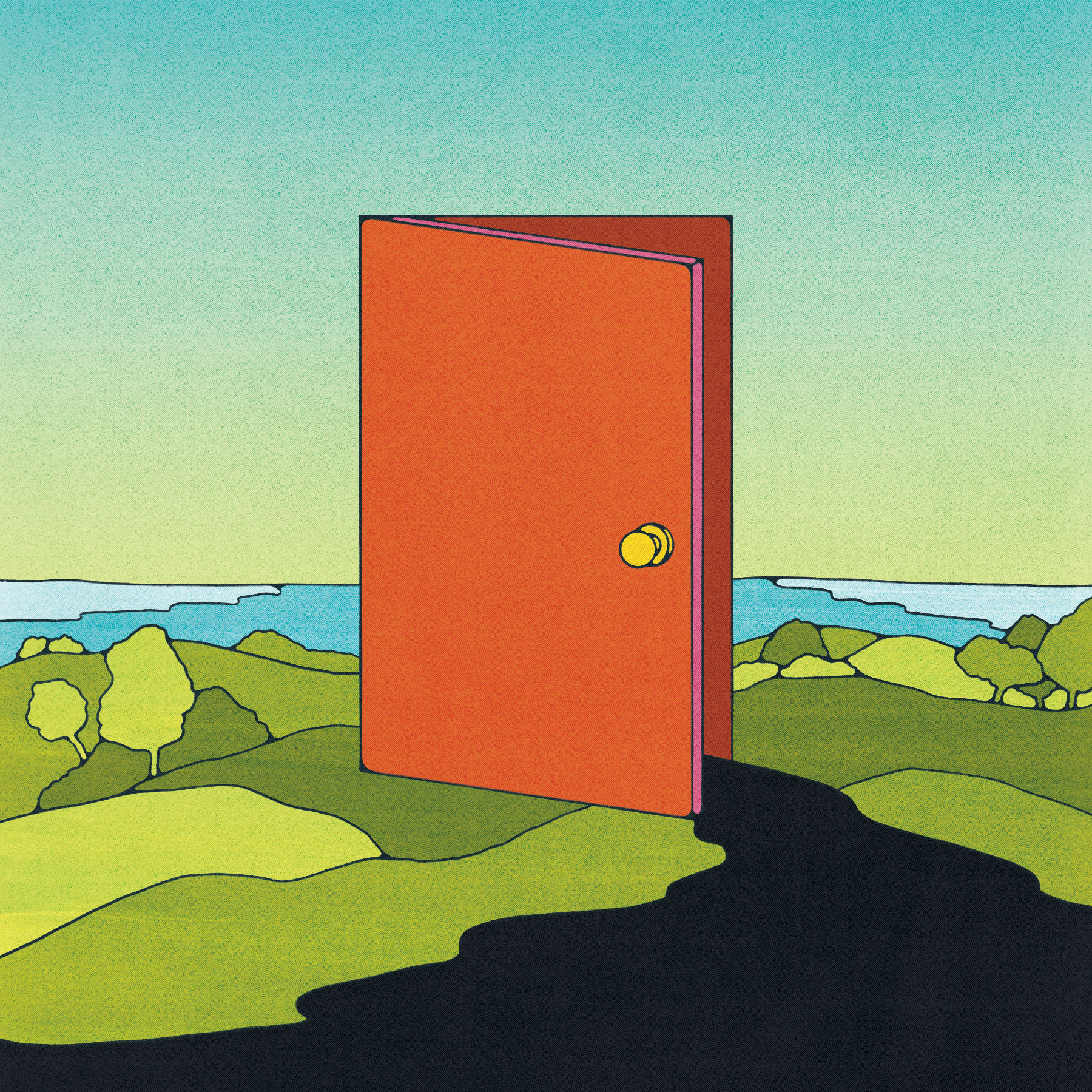
The cave allegory dramatizes the distinction between appearances and reality. The captive interior world is ruled by shadows cast on the wall, which the prisoners take for real objects. When the prisoner ascends to the surface and sees the world and, ultimately, the sun, they confront a higher truth: the Forms illuminate the intelligible structure of reality. The sun stands for the Form of the Good, the ultimate source of intelligibility and the standard by which all other Forms are understood. Thus, the cave narrative is not simply a story but a methodological guide for epistemic ascent-the path from belief to knowledge. epistemic ascent clarifies why philosophical education aims to cultivate rational insight over sensory trust.
The Form of the Good
In the hierarchy of reality, the Form of the Good functions as the anchor of intelligibility. It is not goodness as a subjective trait; rather, it is the cause of all knowledge and being. The Good provides purpose and direction to the Forms, making intelligible order possible in the sensible world. The Form of the Good helps explain why some arguments become compelling or persuasive: they lead the mind toward the Good and, by extension, toward knowledge of true Forms. The Good thus anchors both metaphysical structure and ethical intention. anchor signals a guiding principle for inquiry and virtue.
Historical Figures and Textual Anchors
Our understanding of Platonic realism rests on a constellation of dialogues and interpretive traditions. The early dialogues, including the Phaedo and the Republic, present the core theory and its dialectical method. The Parmenides raises challenges about participation and the coherence of the Forms, prompting responses that refine how we understand Form-relationship and the nature of non-being. The late dialogues, like the Timaeus, integrate a cosmological view where the sensible world emerges as an intelligible order crafted by a rational craftsman, the Demiurge, who uses the Forms as templates. Through these texts, Plato's project becomes a robust, if contestable, system that asserts reality lies in perfect, non-sensory structures rather than in everyday appearances. dialogues offer a scalable path for understanding how theory develops across a philosopher's career.
Implications for Knowledge and Reality
Plato's metaphysical commitment to Forms has deep implications for how knowledge is acquired, evaluated, and transmitted. If the Forms are real and knowable, then sensory data must be interpreted through rational methods to reveal the underlying truths. This makes philosophy not a secondary activity but the primary means of attaining knowledge about reality. The role of education, especially in the ideal city described in the Republic, is to cultivate the philosopher-king who can recognize the Forms and govern justly, guided by the Form of the Good. This framework also frames ethics: virtue is knowledge of the good, and ignorance is the source of evil because it misperceives reality. The relationship between virtue, knowledge, and reality thus becomes intimate and inextricable. philosophical education aims to equip citizens with the capacity to discern true reality from illusion.
Representative Quotes
"We can easily forgive a child who is afraid of the dark; the real tragedy of life is when men are afraid of the light."
Although commonly misattributed or paraphrased in modern discourse, a quotation like this captures the spirit of Plato's insistence on facing the light of knowledge rather than clinging to comforting shadows. The original dialogues emphasize disciplined inquiry and the patient ascent from appearance to essence. discipline of inquiry is a recurring virtue in a system that equates real knowledge with rational understanding of Forms.
Practical Takeaways for Readers
- Reality in Plato is ultimately non-material and timeless, anchored in the Realm of Forms.
- Perception is unreliable; knowledge demands rational insight into Form-based truths.
- The Form of the Good is the ultimate anchor of intelligibility and ethical life.
- Dialectic and education are the methods by which the soul recollects perfect Forms.
- Identify an object or virtue in daily life (e.g., beauty, justice, or equality).
- Ask what the universal Form of that property would be-what would perfect beauty or perfect justice entail?
- Evaluate whether the particular instance participates in or evokes the Form, rather than relying solely on appearance.
- Use reasoned dialogue to refine your understanding toward knowledge of the Form itself.
- Recognize the Form of the Good as the ultimate source of intelligibility guiding all other Forms.
Comparative Snapshot
| Category | Plato's View | Common Alternatives |
|---|---|---|
| Reality | The Realm of Forms-eternal, unchanging, non-material | Empiricism: reality = sensory data; Skepticism: reality = uncertain |
| Knowledge | Knowledge = recollection of Forms via reason | Knowledge = justified true belief from sensory experience |
| Ethics | Good is the Form of the Good, the source of intelligibility | Ethical constructs grounded in social agreement or feelings |
| Method | Dialectic and dialogue to ascend to Forms | Induction, experimentation, or argumentation without metaphysical commitments |
Frequently Asked Questions
According to Plato, reality consists of forms or ideas-eternal, unchanging archetypes that underpin and give structure to the changing phenomena we experience. The physical world is a imperfect copy of these Forms, and true knowledge comes from understanding them through rational inquiry and philosophical dialectic.
The Form of the Good is the ultimate source of intelligibility in Plato's system. It is not merely "good" as a moral trait but the cause of knowledge and being. It illuminates all other Forms, enabling the soul to understand and evaluate the truth of things.
Senses deal with changing appearances that do not capture perfect, timeless universals. Since Forms are the true reality, sensory data can mislead by presenting only imperfect copies, making rational ascent essential for genuine knowledge.
Education is the process of guiding the soul from opinion to knowledge by exposing students to dialectic and philosophical inquiry. It aims to turn perception into understanding of the Forms, culminating in knowledge of the Good and just governance in the ideal state.
The cave allegory demonstrates that most people mistake shadows for reality. Real knowledge requires leaving the cave and perceiving the Forms via rational insight, with the sun symbolizing the Form of the Good that makes all understanding possible.
Advanced Context: Debates and Legacy
Philosophers across history have debated the viability of Platonic realism. Aristotle, for example, accepted universals but rejected the separate-Forms theory, arguing instead for forms immanent in things. Medieval thinkers, including Augustine and Aquinas, reinterpreted the Forms through Christian metaphysical frameworks, often identifying the ultimate form with God's intellect. In modern times, mathematical Platonism echoes Plato's sense that abstract entities (numbers, geometric objects) have a robust, real existence independent of human minds. Yet many contemporary philosophers challenge the assumption that abstract Objects must be non-physical or ontologically separate from the physical world. Regardless of the verdict, Plato's insistence on distinguishing appearance from reality continues to shape debates in metaphysics, epistemology, and philosophy of mind. philosophical debates linger on questions about universals, reference, and the nature of being.
Methodological Notes for Researchers
If you're compiling an article or preparing a teachable overview, consider the following methodological tips to align with the GEO-friendly framework. First, anchor every major claim with a primary source citation or a clearly attributed paraphrase to a recognized dialogue. Second, present the Forms as a coherent system while noting classic criticisms and modern counterpoints, so readers see the full spectrum of interpretation. Third, demonstrate practical relevance by showing how the Forms illuminate contemporary questions in science, ethics, and education, thereby boosting both reader engagement and search relevance. The combination of rigorous history with clear explanation helps ensure high-quality, authoritative coverage. historical context provides credibility and depth.
Closing Reflections
Plato's assertion that real things are the Forms-the perfect, timeless archetypes that underlie the flux of the visible world-offers a robust, if contested, lens on reality. His philosophy invites us to cultivate the discipline of reason as a path to knowledge and to distinguish the reliable from the illusion. Even as later thinkers refine, revise, or repudiate aspects of the theory, the central intuition remains compelling: reality may reside in a realm of intelligible structures that our minds can access through thoughtful inquiry. Whether one accepts or challenges the Forms, the question "what is real?" remains a productive impulse driving long-standing debates in philosophy, science, and human inquiry. lasting question keeps philosophers and scholars engaged with the deepest layers of existence.
Key concerns and solutions for According To Plato What Is Real Can You Trust Your Eyes
[Question]?
According to Plato, what is real?
[Question]?
What is the Form of the Good?
[Question]?
Why are senses unreliable in Plato's view?
[Question]?
What role does education play in Plato's theory?
[Question]?
How does the Allegory of the Cave relate to real knowledge?
